
 EN
EN
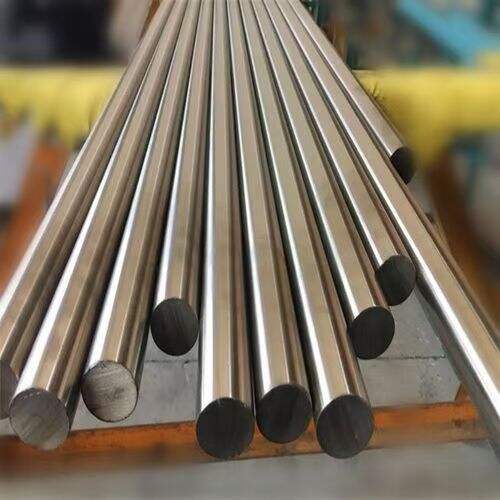
The automotive industry has undergone remarkable transformations over the past century, with material selection playing a pivotal role in vehicle performance, safety, and durability. Among the numerous metallurgical options available to manufacturers, alloy steel stands out as the preferred choice for critical automotive components. This preference stems from alloy steel's exceptional combination of mechanical properties, cost-effectiveness, and manufacturing versatility that traditional carbon steel simply cannot match.
Modern vehicles demand materials that can withstand extreme operational conditions while maintaining structural integrity throughout their service life. Alloy steel delivers these requirements through its sophisticated metallurgical composition, which incorporates various alloying elements such as chromium, nickel, molybdenum, and vanadium. These additions fundamentally alter the steel's microstructure, resulting in enhanced strength, improved corrosion resistance, and superior fatigue performance compared to conventional steel alternatives.
The automotive manufacturing sector's reliance on alloy steel continues to grow as vehicle designs become increasingly complex and performance expectations rise. From engine components operating under high temperatures and pressures to chassis elements requiring exceptional impact resistance, alloy steel provides the material foundation that enables automotive engineers to push the boundaries of vehicle capability while ensuring passenger safety and long-term reliability.
Superior Mechanical Properties of Alloy Steel
Enhanced Strength and Hardness Characteristics
Alloy steel exhibits significantly higher tensile strength compared to plain carbon steel, making it indispensable for automotive applications requiring exceptional load-bearing capacity. The addition of alloying elements creates solid solution strengthening, precipitation hardening, and grain refinement effects that collectively enhance the material's mechanical performance. This superior strength allows automotive manufacturers to design lighter components without compromising structural integrity, contributing to overall vehicle weight reduction and improved fuel efficiency.
The hardness properties of alloy steel can be precisely controlled through careful selection of alloying elements and heat treatment processes. This controllability enables manufacturers to tailor material properties to specific automotive applications, whether requiring surface hardness for wear resistance in transmission components or through-hardness for crankshafts and connecting rods. The ability to achieve consistent hardness values across large production volumes ensures reliable performance in critical automotive systems.
Automotive components manufactured from alloy steel demonstrate superior resistance to plastic deformation under high stress conditions. This characteristic is particularly valuable in safety-critical applications such as impact absorption zones, where materials must maintain their structural function during collision events while absorbing maximum energy to protect vehicle occupants.
Exceptional Fatigue Resistance Properties
The cyclic loading conditions prevalent in automotive applications make fatigue resistance a critical material selection criterion. Alloy steel's enhanced fatigue life stems from its refined grain structure and the presence of carbide-forming elements that impede crack initiation and propagation. This superior fatigue performance translates to extended component service life and reduced maintenance requirements throughout the vehicle's operational lifetime.
Engine components such as connecting rods, crankshafts, and valve springs experience millions of stress cycles during normal operation. Alloy steel provides the necessary fatigue strength to withstand these demanding conditions while maintaining dimensional stability and functional performance. The material's ability to resist fatigue crack growth under variable amplitude loading makes it particularly suitable for real-world automotive applications.
Suspension system components benefit significantly from alloy steel's fatigue resistance, as these elements must endure constant loading variations from road irregularities, braking forces, and cornering stresses. The enhanced endurance limit of alloy steel ensures that suspension components maintain their spring rates and damping characteristics throughout extended service periods, contributing to consistent vehicle handling and ride quality.
Manufacturing Advantages in Automotive Production
Improved Machinability and Formability
Automotive manufacturing processes demand materials that can be efficiently shaped, machined, and formed into complex geometries while maintaining tight dimensional tolerances. Alloy steel compositions can be optimized to enhance machinability through the addition of sulfur or lead, resulting in reduced tool wear, improved surface finishes, and higher production rates. This machinability advantage translates to lower manufacturing costs and improved component quality consistency.
The formability characteristics of alloy steel enable automotive manufacturers to produce complex component shapes through various forming processes including deep drawing, stamping, and roll forming. The material's ability to undergo significant plastic deformation without cracking or developing surface defects makes it ideal for producing intricate automotive body panels, structural reinforcements, and interior components that require precise dimensional accuracy.
Cold forming capabilities of alloy steel allow manufacturers to achieve near-net-shape components with minimal secondary machining requirements. This manufacturing efficiency reduces material waste, shortens production cycle times, and enables cost-effective production of high-volume automotive components while maintaining consistent mechanical properties throughout the formed sections.
Welding and Joining Compatibility
Modern automotive assembly relies heavily on welding processes for joining dissimilar components and creating complex structural assemblies. Alloy steel's controlled chemical composition and microstructure provide excellent weldability characteristics that enable reliable joint formation without compromising mechanical properties in the heat-affected zone. This welding compatibility is essential for automotive manufacturing processes that require consistent joint quality across thousands of weld locations.
The compatibility of alloy steel with various welding processes including resistance spot welding, arc welding, and laser welding provides automotive manufacturers with flexibility in assembly line design and production methodology. Different alloy steel grades can be specifically formulated to optimize their response to particular welding processes, ensuring consistent penetration, minimal distortion, and adequate joint strength for specific automotive applications.
Heat treatment procedures for alloy steel can be designed to restore or enhance mechanical properties in welded assemblies, providing manufacturers with additional process control options. This capability enables the production of complex automotive structures that combine the benefits of efficient welded assembly with optimized material properties in critical stress concentration areas.
Cost-Effectiveness and Economic Benefits
Long-Term Durability and Service Life
The economic advantages of alloy steel in automotive applications extend beyond initial material costs to encompass total cost of ownership considerations. Components manufactured from alloy steel typically exhibit extended service life compared to those made from conventional materials, resulting in reduced warranty claims, lower maintenance costs, and improved customer satisfaction. This durability advantage provides automotive manufacturers with competitive benefits in markets where reliability and longevity are key purchasing factors.
Alloy steel's resistance to various forms of degradation including wear, corrosion, and thermal fatigue contributes to consistent component performance throughout the vehicle's operational life. This reliability reduces the likelihood of premature component failure and associated safety risks, supporting automotive manufacturers' quality reputation and reducing potential liability exposure from product defects.
The predictable performance characteristics of alloy steel enable automotive engineers to design components with optimized safety factors, avoiding over-engineering while ensuring adequate performance margins. This design optimization capability contributes to material cost savings while maintaining required safety and performance standards throughout the component's intended service life.
Manufacturing Efficiency and Scale Economics
Large-scale automotive production benefits significantly from alloy steel's consistent quality and predictable processing characteristics. The material's uniform response to manufacturing processes reduces variability in component dimensions and mechanical properties, enabling tighter quality control and reduced rejection rates. This manufacturing consistency translates to improved production efficiency and lower per-unit manufacturing costs.
Supply chain advantages of alloy steel include widespread availability from multiple suppliers and established production infrastructure that supports high-volume automotive requirements. The mature supply base for alloy steel provides automotive manufacturers with supply security and competitive pricing through supplier competition, contributing to overall cost management in vehicle production programs.
Recycling capabilities of alloy steel align with automotive industry sustainability goals while providing economic benefits through material recovery programs. End-of-life vehicle recycling can recover valuable alloying elements for reuse in new steel production, creating a circular economy that reduces raw material costs and environmental impact associated with automotive manufacturing.
Specific Automotive Applications
Engine and Powertrain Components
Engine manufacturing represents one of the most demanding applications for alloy steel in automotive production, where components must withstand extreme temperatures, pressures, and cyclic stresses while maintaining precise dimensional tolerances. Crankshafts manufactured from alloy steel provide the necessary strength and fatigue resistance to handle combustion forces while maintaining rotational balance throughout millions of operating cycles. The material's ability to be selectively heat treated enables optimization of hardness profiles along the crankshaft length.
Connecting rods benefit from alloy steel's high strength-to-weight ratio, enabling the design of lighter components that reduce engine internal friction and improve fuel efficiency. The material's excellent machinability allows precise manufacturing of complex rod geometries including weight reduction features and optimized bearing surfaces that contribute to engine performance and durability.
Valve train components including camshafts, valve springs, and rocker arms rely on alloy steel's wear resistance and fatigue strength to maintain proper engine timing and valve operation throughout extended service intervals. The material's ability to maintain spring properties at elevated temperatures ensures consistent valve operation across the engine's operating temperature range.
Chassis and Suspension Systems
Automotive chassis applications demand materials capable of handling complex loading conditions including bending, torsion, and impact forces while maintaining structural integrity under various environmental conditions. Alloy steel provides the necessary combination of strength, ductility, and toughness required for chassis components such as frame rails, cross members, and suspension mounting points that form the vehicle's structural foundation.
Suspension system components manufactured from alloy steel demonstrate superior performance in handling road-induced stresses and maintaining vehicle stability throughout the component service life. Coil springs, leaf springs, and torsion bars benefit from the material's enhanced elastic properties and fatigue resistance, ensuring consistent suspension characteristics and vehicle handling predictability.
Safety-critical chassis components such as steering knuckles, control arms, and anti-roll bars require the high strength and impact resistance that alloy steel provides. The material's ability to absorb energy during impact events while maintaining structural continuity contributes to occupant protection and vehicle crashworthiness performance.
Environmental and Sustainability Considerations
Reduced Material Usage Through Enhanced Properties
The superior mechanical properties of alloy steel enable automotive designers to reduce component cross-sections and wall thicknesses while maintaining required strength and safety margins. This material optimization contributes to overall vehicle weight reduction, improving fuel efficiency and reducing greenhouse gas emissions throughout the vehicle's operational life. The environmental benefits of lighter vehicles extend beyond fuel consumption to include reduced tire wear and brake dust generation.
Alloy steel's enhanced properties allow for design consolidation where multiple components can be combined into single integrated parts, reducing material usage, manufacturing complexity, and assembly time. This component integration approach minimizes material waste during production while simplifying manufacturing processes and reducing energy consumption associated with multiple forming and assembly operations.
The extended service life of alloy steel components reduces the frequency of replacement parts production and associated environmental impacts from mining, smelting, and manufacturing operations. This durability advantage contributes to reduced lifetime environmental footprint of vehicles while providing economic benefits to both manufacturers and vehicle owners.
Recycling and Circular Economy Benefits
Alloy steel's excellent recyclability characteristics support automotive industry sustainability initiatives and circular economy principles. The material can be repeatedly recycled without significant degradation of its fundamental properties, enabling recovery of valuable alloying elements and reducing dependence on virgin raw materials. This recycling capability creates economic value streams while minimizing environmental impact associated with steel production.
End-of-life vehicle processing can efficiently separate and recover alloy steel components for remelting and reprocessing into new automotive applications. The magnetic properties of steel facilitate separation from other materials in recycling operations, enabling high recovery rates and maintaining material quality through multiple recycling cycles.
The established infrastructure for steel recycling provides automotive manufacturers with sustainable material sourcing options that reduce carbon footprint while maintaining material quality standards. Integration of recycled alloy steel content into new vehicle production supports environmental goals while providing cost advantages through reduced raw material requirements.
Future Developments and Innovations
Advanced Alloy Steel Compositions
Ongoing research in metallurgy continues to develop new alloy steel compositions that offer enhanced properties for emerging automotive applications. Advanced high-strength steels incorporating micro-alloying elements provide improved strength-to-weight ratios while maintaining forming and welding characteristics required for efficient manufacturing. These developments enable continued lightweighting of automotive structures while meeting increasingly stringent safety and performance requirements.
Nano-structured alloy steel compositions represent a frontier technology that could revolutionize automotive material applications through unprecedented combinations of strength, toughness, and formability. Research into grain refinement techniques and precipitation control mechanisms continues to push the boundaries of achievable mechanical properties while maintaining manufacturing feasibility for high-volume production.
Smart alloy steel compositions incorporating shape memory effects and variable stiffness characteristics may enable future automotive applications including adaptive suspension systems and morphing body panels. These advanced materials could provide automotive designers with new capabilities for optimizing vehicle performance across varying operating conditions.
Manufacturing Process Innovations
Advanced manufacturing techniques including additive manufacturing and precision forming processes are expanding the design possibilities for alloy steel automotive components. Three-dimensional printing of alloy steel enables production of complex internal geometries and integrated cooling passages that would be impossible to achieve through conventional manufacturing methods, opening new applications in engine and thermal management systems.
Precision cold forming processes continue to evolve, enabling production of near-net-shape alloy steel components with enhanced mechanical properties and reduced material waste. These manufacturing advances support both cost reduction and environmental sustainability goals while expanding the range of feasible component geometries and performance characteristics.
Digital manufacturing technologies including real-time process monitoring and adaptive control systems enable optimization of alloy steel processing parameters for consistent quality and enhanced properties. These technological advances support the production of increasingly sophisticated automotive components while maintaining the manufacturing efficiency required for competitive vehicle production.
FAQ
What makes alloy steel superior to regular steel for automotive applications
Alloy steel contains additional elements like chromium, nickel, and molybdenum that significantly enhance its mechanical properties compared to regular carbon steel. These alloying elements provide higher strength, better fatigue resistance, improved corrosion resistance, and superior high-temperature performance. For automotive applications, this translates to lighter components, longer service life, and better performance under the demanding conditions found in modern vehicles.
How does alloy steel contribute to vehicle weight reduction
The enhanced strength properties of alloy steel allow automotive engineers to design components with smaller cross-sections and thinner walls while maintaining required safety margins and performance standards. This material optimization enables significant weight reduction compared to components made from conventional steel. Additionally, the superior fatigue resistance of alloy steel means components can be designed closer to their optimal stress levels without compromising reliability, further contributing to weight savings.
Is alloy steel more expensive than other automotive materials
While alloy steel has higher initial material costs compared to plain carbon steel, it offers superior total cost of ownership benefits. The extended service life, reduced maintenance requirements, and manufacturing efficiency advantages often offset the higher material costs. Additionally, the ability to use less material due to enhanced properties can result in overall cost savings. When compared to alternative materials like aluminum or composites, alloy steel often provides better cost-effectiveness for high-strength applications.
What environmental benefits does alloy steel provide in automotive manufacturing
Alloy steel contributes to environmental sustainability through multiple pathways including vehicle weight reduction that improves fuel efficiency, extended component life that reduces replacement frequency, and excellent recyclability that supports circular economy principles. The material can be recycled repeatedly without property degradation, and the established steel recycling infrastructure enables efficient material recovery. These characteristics reduce the overall environmental impact of vehicle production and operation while supporting automotive industry sustainability goals.

