
 EN
EN
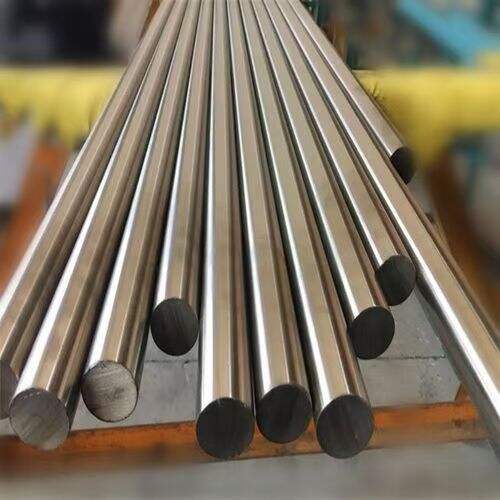
Alloy steel represents one of the most significant advancements in metallurgy, offering exceptional strength, durability, and versatility across countless industrial applications. Unlike plain carbon steel, alloy steel incorporates various alloying elements that enhance its mechanical properties, corrosion resistance, and performance under extreme conditions. Manufacturing industries worldwide rely on alloy steel for critical components ranging from automotive parts to aerospace structures, making it an indispensable material in modern engineering. Understanding the composition, properties, and applications of alloy steel is essential for engineers, manufacturers, and procurement professionals seeking optimal material solutions for their specific requirements.
Understanding Alloy Steel Composition and Classification
Essential Alloying Elements
The fundamental distinction of alloy steel lies in its carefully controlled chemical composition, where specific alloying elements are added to carbon steel to achieve desired properties. Common alloying elements include chromium, nickel, molybdenum, manganese, silicon, and tungsten, each contributing unique characteristics to the final product. Chromium enhances corrosion resistance and hardenability, while nickel improves toughness and ductility at low temperatures. Molybdenum increases strength at elevated temperatures and improves creep resistance, making it valuable for high-temperature applications. The precise combination and percentage of these elements determine the specific grade and performance characteristics of the alloy steel.
Manufacturers carefully balance these alloying elements to create steel grades tailored for specific applications, with total alloy content typically ranging from less than 5% for low-alloy steels to over 50% for highly specialized grades. Silicon acts as a deoxidizing agent and improves electrical properties, while manganese enhances hardenability and strength. Tungsten contributes to high-temperature strength and wear resistance, particularly important in tool steels and cutting applications. Understanding these elemental contributions enables engineers to select the most appropriate alloy steel grade for their specific requirements, ensuring optimal performance and cost-effectiveness.
Low-Alloy versus High-Alloy Classifications
The steel industry classifies alloy steel into two primary categories based on total alloy content: low-alloy steels containing less than 8% alloying elements, and high-alloy steels with alloy content exceeding 8%. Low-alloy steels represent the majority of alloy steel production, offering improved properties over plain carbon steel while maintaining cost-effectiveness and weldability. These grades find extensive use in structural applications, automotive components, and general manufacturing where enhanced strength and toughness are required. High-alloy steels, including stainless steels and tool steels, provide exceptional properties such as corrosion resistance, high-temperature strength, or specialized characteristics for demanding applications.
Each classification serves distinct market segments and application requirements, with low-alloy steels dominating construction and automotive industries due to their favorable strength-to-cost ratio. High-alloy steels command premium pricing but deliver superior performance in harsh environments, critical safety applications, or specialized manufacturing processes. The selection between low-alloy and high-alloy options depends on factors including operating conditions, required properties, regulatory compliance, and economic considerations. Modern alloy steel development continues to push boundaries in both categories, creating new grades that optimize performance while minimizing costs and environmental impact.
Mechanical Properties and Performance Characteristics
Strength and Hardness Enhancements
The mechanical properties of alloy steel significantly surpass those of plain carbon steel, with tensile strength values often exceeding 1000 MPa depending on composition and heat treatment. Alloying elements enable precipitation hardening, solid solution strengthening, and improved hardenability, resulting in superior strength-to-weight ratios essential for modern engineering applications. The hardness of alloy steel can be precisely controlled through heat treatment processes, allowing manufacturers to achieve optimal balance between hardness and toughness for specific applications. This controllability makes alloy steel particularly valuable in applications requiring high surface hardness with tough core properties, such as gears, bearings, and cutting tools.
Heat treatment responses in alloy steel enable precise property optimization through processes including quenching, tempering, and normalizing. The presence of alloying elements allows for slower cooling rates during heat treatment while still achieving desired hardness levels, reducing distortion and cracking risks compared to plain carbon steel. Advanced alloy steel grades can maintain their strength at elevated temperatures, making them suitable for applications in power generation, petrochemical processing, and aerospace industries. The relationship between composition, heat treatment, and resulting properties provides engineers with tremendous flexibility in material selection and processing optimization.
Toughness and Fatigue Resistance
Impact toughness represents a critical advantage of alloy steel over conventional carbon steel, particularly in applications subjected to dynamic loading or low-temperature service conditions. Alloying elements such as nickel and manganese significantly improve Charpy impact values, ensuring reliable performance under shock loading conditions common in automotive, construction, and machinery applications. The improved toughness characteristics allow for thinner section designs without compromising safety margins, contributing to weight reduction and material cost savings in many applications. Fatigue resistance in alloy steel exceeds that of plain carbon steel due to refined microstructures and optimized grain boundaries achieved through controlled alloying and processing.
The fatigue strength of alloy steel components often reaches 40-50% of ultimate tensile strength, compared to 30-35% for plain carbon steel, extending service life and reducing maintenance requirements in cyclic loading applications. This enhanced fatigue performance proves particularly valuable in rotating machinery, springs, and structural components subjected to repeated stress cycles. Modern alloy steel development focuses on optimizing microstructure and inclusion control to further improve fatigue life, with some grades achieving over 10 million cycle endurance limits. The combination of high strength and superior fatigue resistance makes alloy steel the material of choice for critical components in automotive transmissions, aircraft landing gear, and industrial machinery.
Manufacturing Processes and Heat Treatment
Primary Production Methods
The production of alloy steel begins with careful selection and preparation of raw materials, including iron ore, scrap steel, and specific alloying elements required for the target grade composition. Electric arc furnace (EAF) technology dominates alloy steel production due to its flexibility in controlling chemical composition and ability to process various raw material charges efficiently. Secondary refining processes, including ladle metallurgy and vacuum degassing, ensure precise composition control and removal of harmful impurities that could compromise mechanical properties. The casting process for alloy steel requires specialized techniques to prevent segregation of alloying elements and achieve uniform distribution throughout the ingot or continuously cast section.
Hot rolling and forging operations for alloy steel must account for the different working characteristics compared to plain carbon steel, including temperature sensitivity and deformation resistance. The presence of alloying elements affects recrystallization behavior and grain structure development during thermomechanical processing, requiring adjusted rolling schedules and temperature controls. Quality control throughout the manufacturing process includes spectroscopic analysis, mechanical testing, and microstructural examination to ensure conformance to specifications. Modern alloy steel production incorporates advanced process control systems and statistical quality methods to minimize variation and optimize properties while maintaining production efficiency.
Heat Treatment Optimization
Heat treatment represents the key to unlocking the full potential of alloy steel, with processes tailored to specific grades and intended applications. Annealing treatments soften alloy steel for machining operations while homogenizing the microstructure and relieving residual stresses from prior processing. Normalizing provides refined grain structure and improved mechanical properties through controlled cooling from elevated temperatures, often serving as an intermediate treatment before final hardening operations. Quenching and tempering sequences achieve optimal combinations of hardness, strength, and toughness by forming martensitic structures followed by controlled tempering to achieve desired properties.
The hardenability of alloy steel allows for through-hardening of larger sections compared to plain carbon steel, enabling uniform properties in thick-section components critical for heavy machinery and structural applications. Selective hardening techniques, including flame hardening, induction hardening, and case hardening, provide surface enhancement while maintaining tough core properties essential for gears, shafts, and wear-resistant components. Advanced heat treatment facilities utilize computer-controlled furnaces, precise atmosphere control, and automated quenching systems to ensure consistent results and minimize distortion. The interaction between alloy composition and heat treatment parameters provides virtually unlimited possibilities for property optimization in alloy steel applications.
Industrial Applications and Market Sectors
Automotive and Transportation Industries
The automotive industry represents the largest consumer of alloy steel, utilizing various grades for critical components including crankshafts, connecting rods, gears, and axles that demand high strength and fatigue resistance. Advanced high-strength steel (AHSS) grades enable automotive manufacturers to reduce vehicle weight while maintaining or improving safety performance, contributing to fuel efficiency and emission reduction goals. Transmission components manufactured from alloy steel withstand extreme loading conditions while providing precise dimensional stability essential for smooth operation and extended service life. The development of new alloy steel grades specifically for automotive applications continues to drive innovation in composition optimization and processing techniques.
Rail transportation relies heavily on alloy steel for rails, wheels, and structural components that must endure heavy loads, thermal cycling, and environmental exposure over decades of service. The superior wear resistance and toughness of alloy steel enable extended maintenance intervals and improved safety margins in railway applications. Aerospace applications utilize specialized alloy steel grades for landing gear, engine components, and structural elements where strength-to-weight ratio and reliability are paramount. The stringent quality requirements and traceability demands of aerospace applications have driven advances in alloy steel production and testing methodologies that benefit other industries.
Construction and Infrastructure Development
Construction applications for alloy steel include high-strength structural members, reinforcing bars, and prestressing cables that enable architects and engineers to design more efficient and durable structures. The improved weldability and formability of modern low-alloy steels facilitate construction processes while providing superior performance compared to conventional structural steels. Bridge construction particularly benefits from alloy steel's enhanced corrosion resistance and fatigue performance, extending service life and reducing maintenance costs for critical infrastructure. Seismic-resistant design increasingly specifies alloy steel grades that provide ductility and energy absorption capabilities essential for earthquake-prone regions.
Pipeline applications utilize alloy steel for both onshore and offshore installations where corrosion resistance, toughness, and weldability are critical for safe and reliable operation. The oil and gas industry demands specialized alloy steel grades capable of withstanding sour service conditions, high pressures, and extreme temperatures encountered in modern extraction and processing operations. Power generation facilities rely on alloy steel for boiler tubes, turbine components, and pressure vessels operating at elevated temperatures and pressures. The long-term reliability requirements of infrastructure applications drive continuous improvement in alloy steel composition and processing to enhance durability and reduce lifecycle costs.
Tool and Die Manufacturing Applications
Cutting Tool Technologies
Tool steels, a specialized category of alloy steel, provide the hardness, wear resistance, and toughness required for cutting tools, dies, and molds used in manufacturing operations. The high carbon content combined with alloying elements such as tungsten, molybdenum, and vanadium enables tool steels to maintain sharp cutting edges while resisting wear and thermal degradation. Hot work tool steels contain chromium and molybdenum to provide oxidation resistance and thermal fatigue resistance essential for die casting, forging, and extrusion operations. Cold work tool steels emphasize wear resistance and dimensional stability for stamping dies, punches, and forming tools operating at ambient temperatures.
The development of powder metallurgy tool steels has expanded the possibilities for alloy steel composition, enabling higher alloy contents and more uniform distribution of carbides and other strengthening phases. These advanced tool steel grades provide extended tool life and improved surface finish in demanding machining applications. High-speed steel, containing significant amounts of tungsten or molybdenum, maintains hardness at elevated temperatures generated during high-speed cutting operations. The selection of appropriate tool steel grades requires careful consideration of operating conditions, workpiece materials, and economic factors to optimize performance and tool life.
Precision Manufacturing and Quality Control
Precision manufacturing applications demand alloy steel with exceptional dimensional stability, surface finish capabilities, and consistent mechanical properties throughout the material cross-section. Gage blocks, measuring instruments, and precision machinery components utilize specially processed alloy steel grades with controlled thermal expansion coefficients and stress-free microstructures. The aerospace and medical device industries require alloy steel with documented chemical composition, mechanical properties, and processing history to ensure traceability and quality assurance. Advanced testing methods including ultrasonic inspection, magnetic particle testing, and microstructural analysis verify the integrity and quality of alloy steel components for critical applications.
Quality control systems for alloy steel manufacturing incorporate statistical process control, real-time monitoring, and automated inspection systems to maintain consistent product quality and minimize variation. Certification programs and industry standards establish requirements for alloy steel composition, properties, and testing procedures to ensure reliable performance in demanding applications. The implementation of Industry 4.0 technologies in alloy steel production enables predictive maintenance, process optimization, and quality enhancement through data analytics and machine learning algorithms. Continuous improvement initiatives focus on reducing defects, improving yield, and enhancing customer satisfaction while maintaining competitive costs in global markets.
Future Developments and Market Trends
Advanced Alloy Design and Microstructural Engineering
The future of alloy steel development focuses on computational materials design, utilizing artificial intelligence and machine learning to predict optimal compositions and processing parameters for specific applications. Advanced characterization techniques including atom probe tomography and high-resolution electron microscopy enable detailed understanding of microstructure-property relationships in alloy steel. Thermomechanical processing optimization combines controlled rolling, cooling, and heat treatment to achieve fine-grained microstructures with enhanced properties. Additive manufacturing technologies are expanding the possibilities for complex alloy steel components with tailored properties and reduced material waste compared to conventional manufacturing methods.
Nanostructured alloy steel represents an emerging technology that incorporates nanoscale precipitates or grain refinement to achieve exceptional strength and toughness combinations. Research into new alloying concepts includes high-entropy alloys and compositionally complex steels that challenge traditional alloy design principles. The integration of smart manufacturing technologies enables real-time property prediction and process adjustment during alloy steel production. Environmental sustainability drives development of alloy steel grades with reduced alloying element content while maintaining performance, along with improved recyclability and energy-efficient production processes.
Market Dynamics and Economic Factors
Global demand for alloy steel continues to grow driven by infrastructure development in emerging economies, renewable energy projects, and advanced manufacturing technologies. Supply chain considerations for alloying elements, particularly critical materials such as nickel, chromium, and molybdenum, influence alloy steel composition strategies and pricing structures. Trade policies and environmental regulations impact alloy steel production costs and market competitiveness, driving innovation in efficient production technologies and alternative compositions. The circular economy concept promotes increased recycling of alloy steel scrap and development of grades specifically designed for end-of-life recyclability.
Digitalization of the steel industry enables improved customer service, supply chain optimization, and product development through enhanced data management and analytics capabilities. Market consolidation in the alloy steel industry focuses resources on research and development while improving production efficiency and global market reach. Emerging applications in renewable energy, electric vehicles, and advanced manufacturing create new opportunities for specialized alloy steel grades and drive continued innovation. The balance between performance requirements, cost considerations, and environmental impact shapes future alloy steel development priorities and market positioning strategies.
FAQ
What makes alloy steel different from regular carbon steel
Alloy steel differs from regular carbon steel through the intentional addition of alloying elements beyond carbon and iron, typically including chromium, nickel, molybdenum, manganese, and other elements in controlled proportions. These alloying elements significantly enhance mechanical properties such as strength, hardness, toughness, and corrosion resistance compared to plain carbon steel. The presence of alloying elements also improves hardenability, allowing for through-hardening of larger cross-sections and more uniform properties throughout the material. While carbon steel relies primarily on carbon content for property control, alloy steel achieves superior performance through the synergistic effects of multiple alloying elements working together.
How do you select the right alloy steel grade for a specific application
Selecting the appropriate alloy steel grade requires careful analysis of application requirements including operating temperature, stress levels, environmental conditions, and required mechanical properties. Engineers must consider factors such as tensile strength, impact toughness, fatigue resistance, corrosion resistance, and weldability based on service conditions. Economic considerations including material cost, processing requirements, and availability also influence grade selection decisions. Consultation with materials engineers and steel suppliers helps identify optimal grades that balance performance requirements with cost-effectiveness, while industry standards and specifications provide guidance for specific applications such as pressure vessels, structural components, or cutting tools.
What heat treatment processes are most commonly used for alloy steel
The most common heat treatment processes for alloy steel include annealing for softening and stress relief, normalizing for grain refinement and property improvement, and quenching followed by tempering to achieve optimal strength-toughness combinations. Annealing involves heating to elevated temperatures followed by slow cooling to produce soft, machinable microstructures. Quenching rapidly cools the steel from high temperatures to form hard martensitic structures, while subsequent tempering at intermediate temperatures reduces brittleness and achieves desired property balance. Surface hardening treatments such as carburizing, nitriding, or induction hardening provide wear-resistant surfaces while maintaining tough cores, particularly valuable for gears, shafts, and tooling applications.
What are the main advantages of using alloy steel in manufacturing
The main advantages of alloy steel in manufacturing include superior mechanical properties enabling lighter, stronger component designs, improved fatigue resistance extending service life, and enhanced hardenability allowing uniform properties in larger cross-sections. Alloy steel offers better weldability and formability compared to high-carbon steels while providing significantly improved performance over plain carbon steel. The ability to tailor properties through composition and heat treatment provides flexibility in meeting specific application requirements. Additional benefits include improved corrosion resistance in certain grades, better high-temperature performance, and enhanced machinability in free-cutting grades, making alloy steel cost-effective for demanding applications where performance justifies the premium cost over conventional steels.

