
 EN
EN
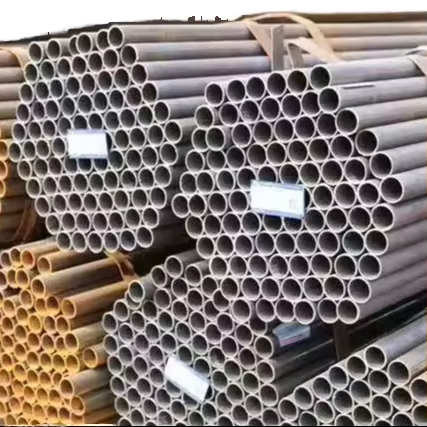
Alloy steel pipes represent a cornerstone of modern industrial infrastructure, combining the foundational strength of carbon steel with carefully selected alloying elements to create materials that exceed the performance capabilities of conventional steel products. These specialized pipes deliver enhanced mechanical properties, superior corrosion resistance, and exceptional durability under extreme operating conditions that would challenge standard steel alternatives. Understanding the composition, manufacturing processes, and application-specific advantages of alloy steel pipes enables industrial decision-makers to select optimal piping solutions that ensure long-term operational reliability and cost-effectiveness across demanding industrial environments.
The industrial significance of alloy steel pipes extends beyond their immediate mechanical advantages to encompass their role in enabling advanced manufacturing processes, supporting critical infrastructure systems, and facilitating the safe transport of various media under challenging operational parameters. These pipes serve as essential components in industries ranging from petrochemicals and power generation to aerospace and automotive manufacturing, where their unique combination of strength, temperature resistance, and chemical compatibility makes them indispensable for maintaining operational integrity and safety standards.
Composition and Metallurgical Fundamentals of Alloy Steel Pipes
Essential Alloying Elements and Their Functions
Alloy steel pipes derive their superior properties from the strategic incorporation of specific alloying elements that modify the base iron-carbon matrix to achieve targeted performance characteristics. Chromium, typically present in concentrations ranging from 0.5% to 9%, enhances corrosion resistance and hardenability while contributing to improved high-temperature strength retention. Nickel additions, generally between 0.25% and 5%, increase toughness and ductility while improving resistance to impact loading and thermal cycling stress.
Molybdenum, commonly added in amounts from 0.15% to 1%, significantly improves creep resistance and high-temperature strength, making alloy steel pipes particularly suitable for elevated temperature applications. Vanadium and niobium serve as grain refiners and carbide formers, enhancing strength and toughness through precipitation hardening mechanisms. The precise balance of these elements determines the specific grade and performance envelope of the resulting alloy steel pipes, enabling customization for particular industrial applications.
Microstructural Development During Manufacturing
The manufacturing process of alloy steel pipes involves controlled thermal treatments that develop optimal microstructures for enhanced mechanical properties. Hot rolling operations align the grain structure and distribute alloying elements uniformly throughout the pipe wall thickness. Subsequent heat treatment processes, including normalizing, quenching, and tempering, create specific microstructural configurations that optimize strength, toughness, and dimensional stability.
Controlled cooling rates during manufacturing prevent the formation of undesirable phases while promoting the development of fine-grained microstructures that enhance mechanical performance. The relationship between processing parameters and final microstructure directly influences the service performance of alloy steel pipes, requiring careful process control to achieve consistent material properties across production runs.
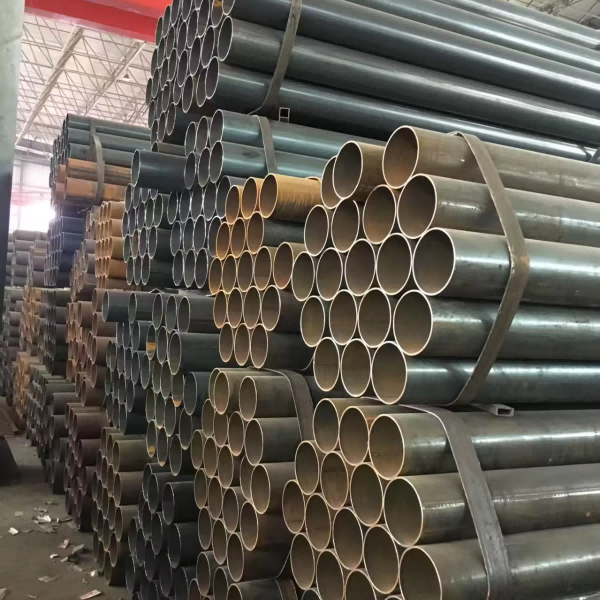
Manufacturing Processes and Quality Control Standards
Seamless Pipe Production Methods
Seamless alloy steel pipes are manufactured through rotary piercing processes that create hollow billets from solid steel rounds, followed by elongation and wall thickness reduction operations. The piercing process utilizes specialized tooling to create the initial cavity while maintaining material integrity and eliminating potential weak points associated with welded seams. Subsequent pilgering or stretch reducing operations achieve final dimensions while imparting beneficial mechanical properties through controlled deformation.
Temperature control throughout the seamless manufacturing process ensures optimal material flow and prevents defect formation that could compromise pipe integrity. The seamless construction of alloy steel pipes eliminates longitudinal weld seams, providing uniform strength characteristics and enhanced pressure-bearing capabilities compared to welded alternatives. This manufacturing approach proves particularly advantageous for high-pressure applications where structural integrity under extreme loading conditions is paramount.
Welded Pipe Fabrication and Post-Weld Treatment
Welded alloy steel pipes utilize high-frequency electric resistance welding or submerged arc welding processes to join formed steel strips into tubular configurations. These processes require precise control of welding parameters to ensure complete fusion and eliminate potential defects in the weld zone. Post-weld heat treatment operations relieve residual stresses and restore material properties in the heat-affected zone, ensuring uniform performance characteristics across the entire pipe cross-section.
Advanced welding techniques for alloy steel pipes incorporate preheating and controlled cooling procedures that prevent hydrogen cracking and maintain desired mechanical properties. Quality control measures include radiographic testing, ultrasonic inspection, and hydrostatic pressure testing to verify weld integrity and overall pipe performance capabilities. The welded construction approach enables cost-effective production of larger diameter alloy steel pipes while maintaining acceptable performance standards for many industrial applications.
Mechanical Properties and Performance Characteristics
Strength and Toughness Considerations
Alloy steel pipes exhibit superior mechanical properties compared to carbon steel alternatives, with yield strengths typically ranging from 35,000 to 100,000 psi depending on the specific alloy composition and heat treatment condition. The enhanced strength characteristics enable the use of thinner wall sections for equivalent pressure ratings, reducing material costs and system weight while maintaining structural integrity. Toughness properties, measured through Charpy impact testing, demonstrate the ability of alloy steel pipes to absorb energy during rapid loading conditions without catastrophic failure.
The relationship between strength and toughness in alloy steel pipes requires careful optimization to ensure adequate performance across the expected service envelope. Higher strength grades may exhibit reduced toughness at lower temperatures, necessitating proper grade selection based on operating conditions. Temperature-dependent mechanical properties influence the selection of alloy steel pipes for applications involving thermal cycling or extreme temperature exposure.
Fatigue Resistance and Cyclic Loading Performance
Alloy steel pipes demonstrate enhanced fatigue resistance under cyclic loading conditions, making them suitable for applications involving repeated pressure fluctuations or mechanical stress cycles. The improved fatigue life results from refined microstructures and reduced stress concentration sites compared to conventional steel materials. Fatigue crack propagation resistance enables alloy steel pipes to maintain structural integrity under long-term cyclic loading scenarios that would cause premature failure in standard carbon steel systems.
Design considerations for fatigue-critical applications require understanding of stress concentration factors, surface finish effects, and environmental influences on crack initiation and propagation. Proper installation practices and stress relief procedures further enhance the fatigue performance of alloy steel pipes in service applications. Regular inspection protocols help identify potential fatigue damage before it reaches critical levels, ensuring continued safe operation of piping systems.
Corrosion Resistance and Chemical Compatibility
Atmospheric and General Corrosion Behavior
The corrosion resistance of alloy steel pipes surpasses that of carbon steel through the formation of protective oxide layers and improved chemical stability in various environments. Chromium additions create passive surface films that resist atmospheric corrosion and reduce general corrosion rates in mildly aggressive environments. The enhanced corrosion resistance extends service life and reduces maintenance requirements compared to unalloyed steel alternatives.
Environmental factors including humidity, temperature, and atmospheric contaminants influence the corrosion behavior of alloy steel pipes. Proper material selection based on anticipated exposure conditions ensures optimal performance and cost-effectiveness over the intended service life. Protective coating systems can further enhance corrosion resistance when required by specific environmental conditions or extended service life requirements.
Chemical Process Compatibility
Alloy steel pipes demonstrate superior compatibility with various chemical process media, including organic solvents, weak acids, and alkaline solutions. The chemical resistance characteristics depend on the specific alloy composition and the nature of the process fluid, requiring careful evaluation of material compatibility for each application. Temperature effects on chemical compatibility must be considered, as elevated temperatures can accelerate corrosion processes and alter material behavior.
Process fluid purity and contaminant levels significantly impact the chemical compatibility of alloy steel pipes. Chloride-containing environments require special consideration due to potential stress corrosion cracking susceptibility in certain alloy compositions. Material selection guidelines help identify appropriate alloy steel pipe grades for specific chemical process applications, ensuring safe and reliable operation throughout the intended service life.
Industrial Applications and Selection Criteria
High-Temperature Service Applications
Alloy steel pipes excel in high-temperature applications where elevated strength retention and creep resistance are critical performance requirements. Power generation facilities utilize alloy steel pipes for superheater and reheater applications, where operating temperatures exceed the capabilities of carbon steel materials. The enhanced high-temperature properties enable operation at steam conditions that improve thermal efficiency while maintaining long-term structural integrity.
Petrochemical and refining operations employ alloy steel pipes in reformer furnaces, catalytic crackers, and other high-temperature processes where material reliability under extreme thermal conditions is essential. The ability to maintain mechanical properties at elevated temperatures reduces the risk of catastrophic failure and extends equipment service life. Proper grade selection considers both short-term strength requirements and long-term creep rupture properties for sustained high-temperature operation.
Pressure Vessel and Structural Applications
The superior strength characteristics of alloy steel pipes make them ideal for high-pressure vessel construction and structural applications requiring exceptional load-bearing capacity. Pressure vessel applications benefit from the enhanced strength-to-weight ratio, enabling reduced wall thickness and material savings while meeting pressure containment requirements. The improved toughness properties provide additional safety margins against brittle failure under extreme loading conditions.
Structural applications utilize alloy steel pipes in offshore platforms, bridge construction, and heavy machinery where high strength and weather resistance are critical design considerations. The combination of strength, toughness, and corrosion resistance enables the design of lighter, more efficient structures while maintaining safety and durability standards. Proper welding procedures and inspection protocols ensure that fabricated structures achieve the full performance potential of alloy steel pipe materials.
FAQ
What is the difference between alloy steel pipes and carbon steel pipes?
Alloy steel pipes contain additional alloying elements beyond carbon and iron, such as chromium, nickel, molybdenum, and vanadium, which enhance their mechanical properties, corrosion resistance, and high-temperature performance. Carbon steel pipes contain primarily iron and carbon with minimal alloying elements, making them less expensive but with lower performance capabilities in demanding applications.
How do you select the appropriate grade of alloy steel pipes for a specific application?
Selection of alloy steel pipe grades requires evaluation of operating conditions including temperature, pressure, chemical environment, and mechanical loading requirements. Material property requirements such as strength, toughness, and corrosion resistance must be matched to available alloy compositions, with consideration for fabrication requirements and cost constraints to identify the optimal grade for the specific application.
Can alloy steel pipes be welded using standard welding procedures?
Alloy steel pipes typically require specialized welding procedures that account for their chemical composition and heat treatment condition. Preheating, controlled cooling, and post-weld heat treatment may be necessary to maintain mechanical properties and prevent cracking. Qualified welding procedures and certified welders are essential to ensure proper joint integrity and performance in service applications.
What maintenance practices extend the service life of alloy steel pipes?
Regular inspection programs, including visual examination, ultrasonic testing, and corrosion monitoring, help identify potential issues before they become critical. Proper installation practices, stress relief procedures, and protection from corrosive environments through coating systems or cathodic protection extend service life. Maintaining proper operating conditions within design parameters and addressing any damage promptly prevents accelerated degradation and ensures reliable long-term performance.
Table of Contents
- Composition and Metallurgical Fundamentals of Alloy Steel Pipes
- Manufacturing Processes and Quality Control Standards
- Mechanical Properties and Performance Characteristics
- Corrosion Resistance and Chemical Compatibility
- Industrial Applications and Selection Criteria
-
FAQ
- What is the difference between alloy steel pipes and carbon steel pipes?
- How do you select the appropriate grade of alloy steel pipes for a specific application?
- Can alloy steel pipes be welded using standard welding procedures?
- What maintenance practices extend the service life of alloy steel pipes?

